
In 2022 the value of Japan's currency, the yen, fell by 35\% against the US dollar. Japan's central bank intervened in the currency markets to increase the external value of the yen. This intervention cost the central bank $$\(\$ 20.8\)$$ billion. Evaluate policies that can be used to prevent a country's exchange rate from depreciating. Refer to a developed country of your choice in your answer.
Exam No:wec14-01-que-20240605 Year:2024 Question No:8
Answer:
Indicative content guidance
Answers must be credited by using the level descriptors (below) in line with the general marking guidance. The indicative content below exemplifies some of the points that candidates may make but this does not imply that any of these must be included. Other relevant points must also be credited.
QS9: Interpret, apply and analyse information in written, graphical, tabular and numerical forms.
Knowledge, Application and Analysis (12 marks) - indicative content
- Understanding of government intervention in the currency markets
Possible policies might include:
- Sale of foreign currency/dollar (or gold) reserves on the foreign exchange market in order to decrease the supply of the yen
- Purchase of domestic currency/yen in order to decrease the supply of the yen and increase the external value of the currency
- Reduction in the money supply in the Japanese economy through reduced asset purchases (ending quantitative easing)
- Increase in the (relative) interest rates in Japan: this will result in greater hot money flows and increase the demand for the yen
- Pegging currency against a more stable currency, e.g. dollar, will fix the exchange rate and prevent further depreciations
- Other policies to encourage inflow of FDI and/or portfolio investment into Japan; will increase demand for the yen
- Other policies to restrict outflow of funds from Japan (e.g. through remittances, repatriation of profits, capital flight etc.); will reduce the supply of yen
- Policies to reduce demand for foreign currencies e.g. protectionism
N.B. Award maximum of Level 3 ( 9 marks) if a candidate does not refer to a developed country in their answer
Evaluation (8 marks) - indicative content
- Prioritisation/comparison of the effectiveness of different policies
- Significance of the causes discussed: a combination of factors is likely to have a larger impact on the exchange rate - "fell by \(35 \%\) "
- Use of monetary policies may cause conflicts with other macroeconomic objectives/policies
- Ability of the government to sell its reserves/dollar depends on the value of reserves/dollar held, and its international value
- Problems of currency stabilisation: depletion of foreign exchange reserves/ foreign currency gap - "cost the Japanese Government \$20.8 billion"
- Possible political/ethical issues surrounding the selling of reserves
- Relative interest rate is more important than interest rate in determining hot money flows
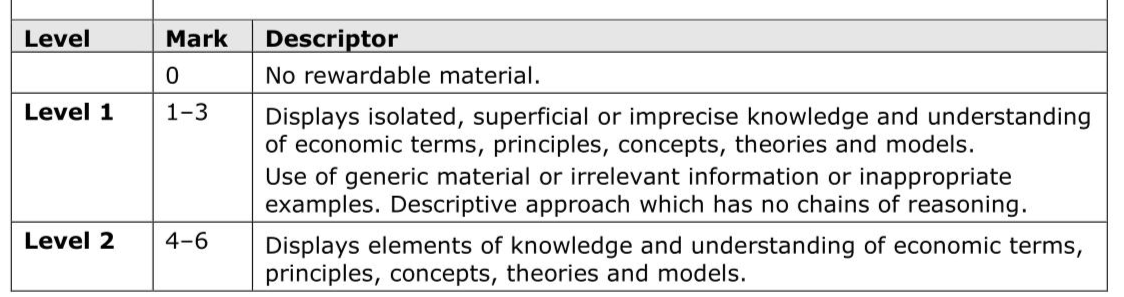
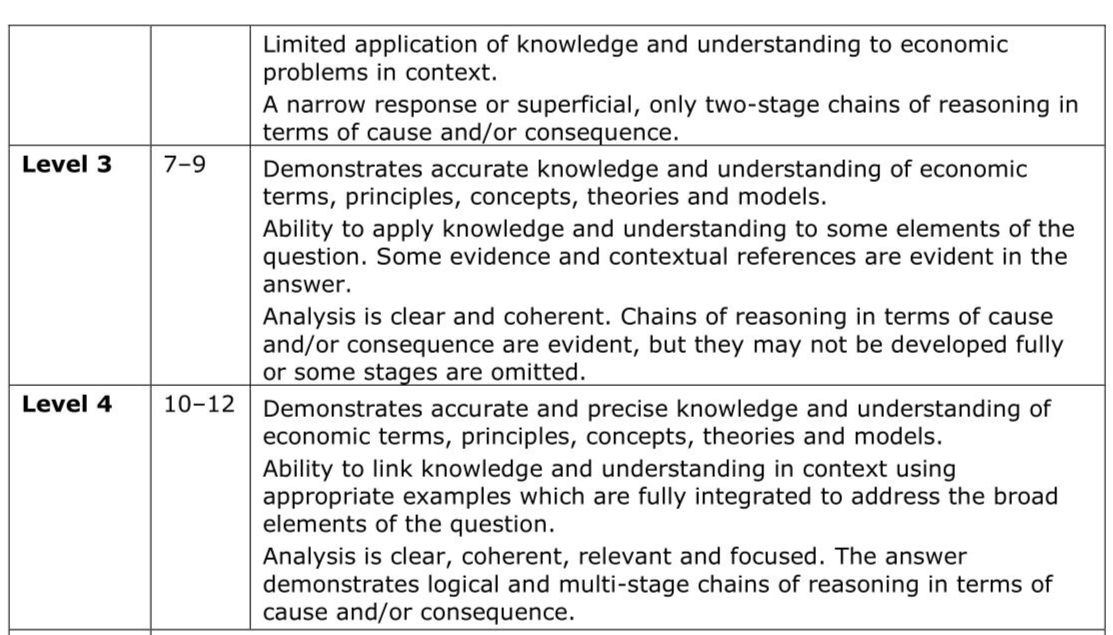
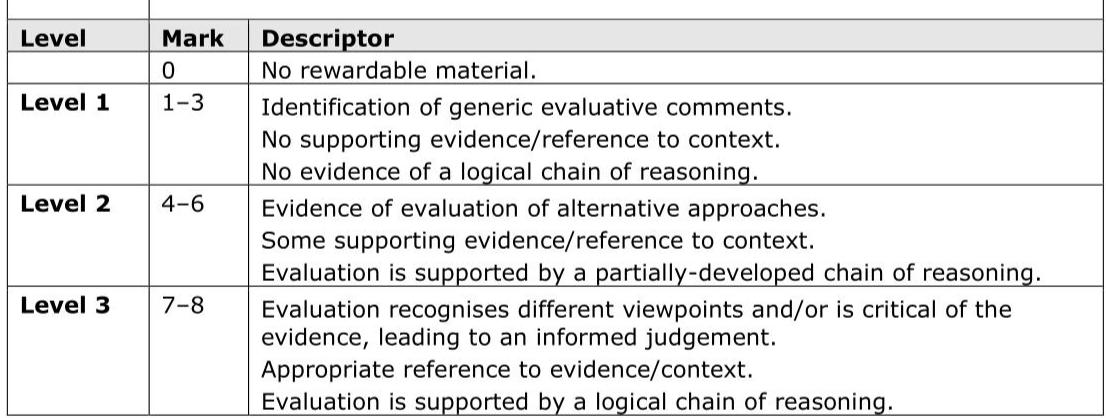
Answers must be credited by using the level descriptors (below) in line with the general marking guidance. The indicative content below exemplifies some of the points that candidates may make but this does not imply that any of these must be included. Other relevant points must also be credited.
QS9: Interpret, apply and analyse information in written, graphical, tabular and numerical forms.
Knowledge, Application and Analysis (12 marks) - indicative content
- Understanding of government intervention in the currency markets
Possible policies might include:
- Sale of foreign currency/dollar (or gold) reserves on the foreign exchange market in order to decrease the supply of the yen
- Purchase of domestic currency/yen in order to decrease the supply of the yen and increase the external value of the currency
- Reduction in the money supply in the Japanese economy through reduced asset purchases (ending quantitative easing)
- Increase in the (relative) interest rates in Japan: this will result in greater hot money flows and increase the demand for the yen
- Pegging currency against a more stable currency, e.g. dollar, will fix the exchange rate and prevent further depreciations
- Other policies to encourage inflow of FDI and/or portfolio investment into Japan; will increase demand for the yen
- Other policies to restrict outflow of funds from Japan (e.g. through remittances, repatriation of profits, capital flight etc.); will reduce the supply of yen
- Policies to reduce demand for foreign currencies e.g. protectionism
N.B. Award maximum of Level 3 ( 9 marks) if a candidate does not refer to a developed country in their answer
Evaluation (8 marks) - indicative content
- Prioritisation/comparison of the effectiveness of different policies
- Significance of the causes discussed: a combination of factors is likely to have a larger impact on the exchange rate - "fell by \(35 \%\) "
- Use of monetary policies may cause conflicts with other macroeconomic objectives/policies
- Ability of the government to sell its reserves/dollar depends on the value of reserves/dollar held, and its international value
- Problems of currency stabilisation: depletion of foreign exchange reserves/ foreign currency gap - "cost the Japanese Government \$20.8 billion"
- Possible political/ethical issues surrounding the selling of reserves
- Relative interest rate is more important than interest rate in determining hot money flows
Knowledge points:
20.Balance of payments, exchange rates and international competitiveness
Solution:
Download APP for more features
1. Tons of answers.
2. Smarter Al tools enhance your learning journey.
IOS
Download
Download
Android
Download
Download
Google Play
Download
Download